AI changes more than tools: it reshapes coordination, memory and responsibility. The Agentic Enterprise gives leaders and managers a framework for organising human–agent work, governing delegated capabilities and turning knowledge into collective action.
Press · Interviews · Podcasts
The organisation that learns to work with agents.
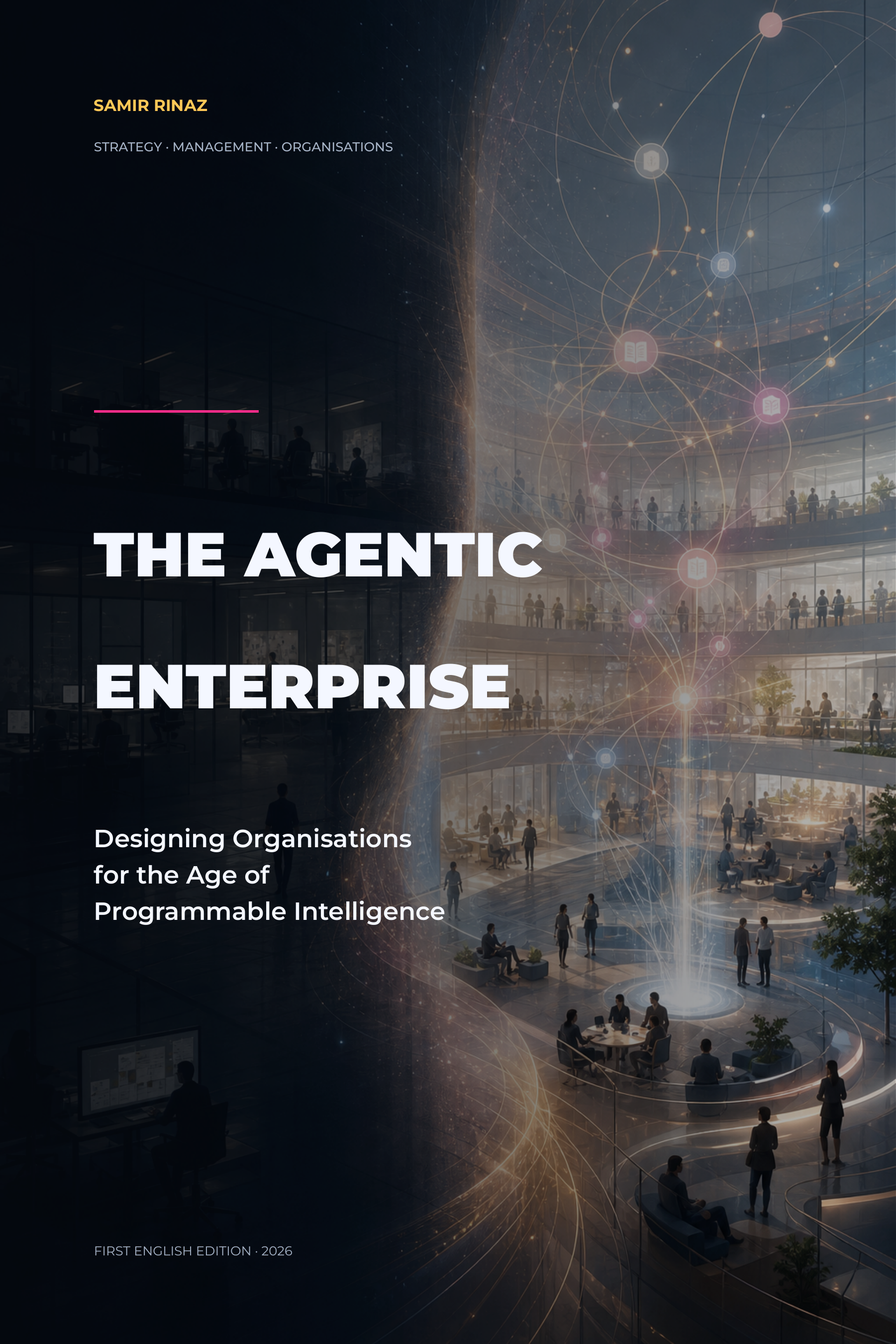
Discover The Agentic Enterprise, Samir RINAZ’s book on organisational transformation in the age of programmable intelligence.
Overview
Introduce the book.
What becomes of the enterprise when intelligence becomes programmable, distributable and orchestratable? Samir RINAZ explores how organisations can transform knowledge into operational capability. The book connects active memory, Agent Capital, Workflow Engineering, human–agent teaming and governance. Its PAEL and OAEL maturity models distinguish personal augmentation from organisational capability. From the history of software to the horizons of 2030 and 2040, it offers leaders, managers and transformation teams concepts for building an organisation that learns, rather than a collection of AI demonstrations.
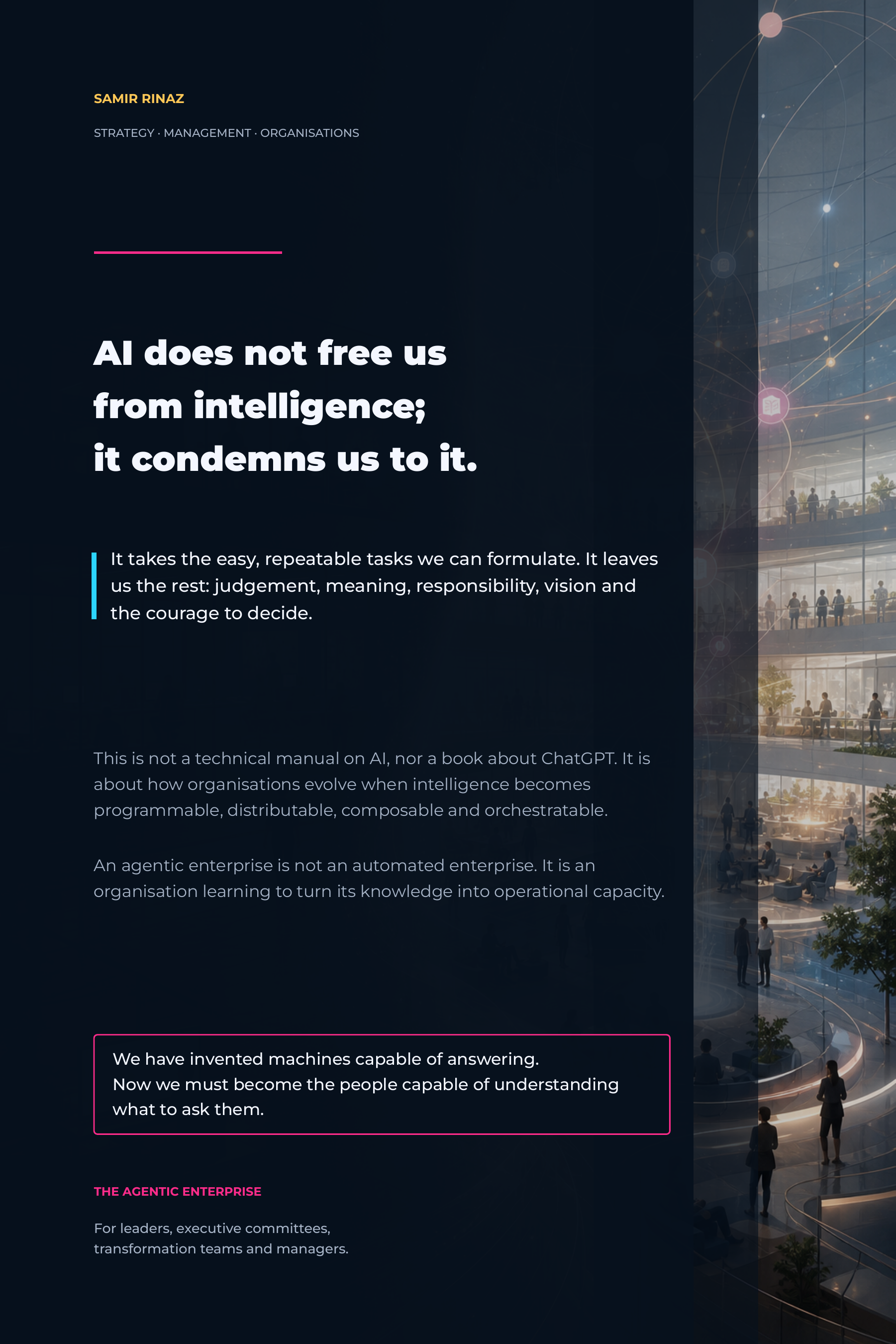
“AI does not free us from intelligence; it condemns us to it.”
Editorial angles
Six conversations worth having.
Beyond copilots
Why the next challenge is the organisation of work, not just the interface.
The agentic manager
Orchestrating a hybrid capability without becoming a supervisor of robots.
Active memory
Making knowledge usable by people and agents, rather than merely storing it.
New roles
Human-Agent Team Leads, Workflow Architects, AgentOps and capability governance.
The agentic divide
The growing gap between consuming AI and learning to orchestrate it.
AI Factory or Intelligence Factory?
One operates AI; the other enables the organisation to learn.
Media kit
Resources for your coverage.
Use these resources when covering the book, with credit to Samir RINAZ. Final English cover artwork. Amazon availability will be announced here.
English front coverPNG · English editionOpen resourceEnglish back coverPNG · English editionOpen resourceAuthor portraitJPGOpen resourcePress dossierHTML · PrintableOpen resourceAuthor biographyTXTOpen resourcePitches, quotes and anglesTXTOpen resourceComplete English press kitZIP · Public resources onlyOpen resource

Press enquiries
Interview, podcast or review copy.
Tell us about your project. Requests are considered individually; personal access to the book may be provided for editorial work.
Already have an invitation?Enter the reading room →